Sensing Quantum
A programme of installations and events exploring the latest quantum technologies.
Quantum physics revealed over a century ago that, at the smallest scales, matter behaves in ways that challenge our everyday understanding of reality. Particles can exist in multiple states at once, become entangled across distances, or even tunnel through energy barriers. Today, these principles are giving rise to a new generation of quantum technologies that could fundamentally reshape our world.
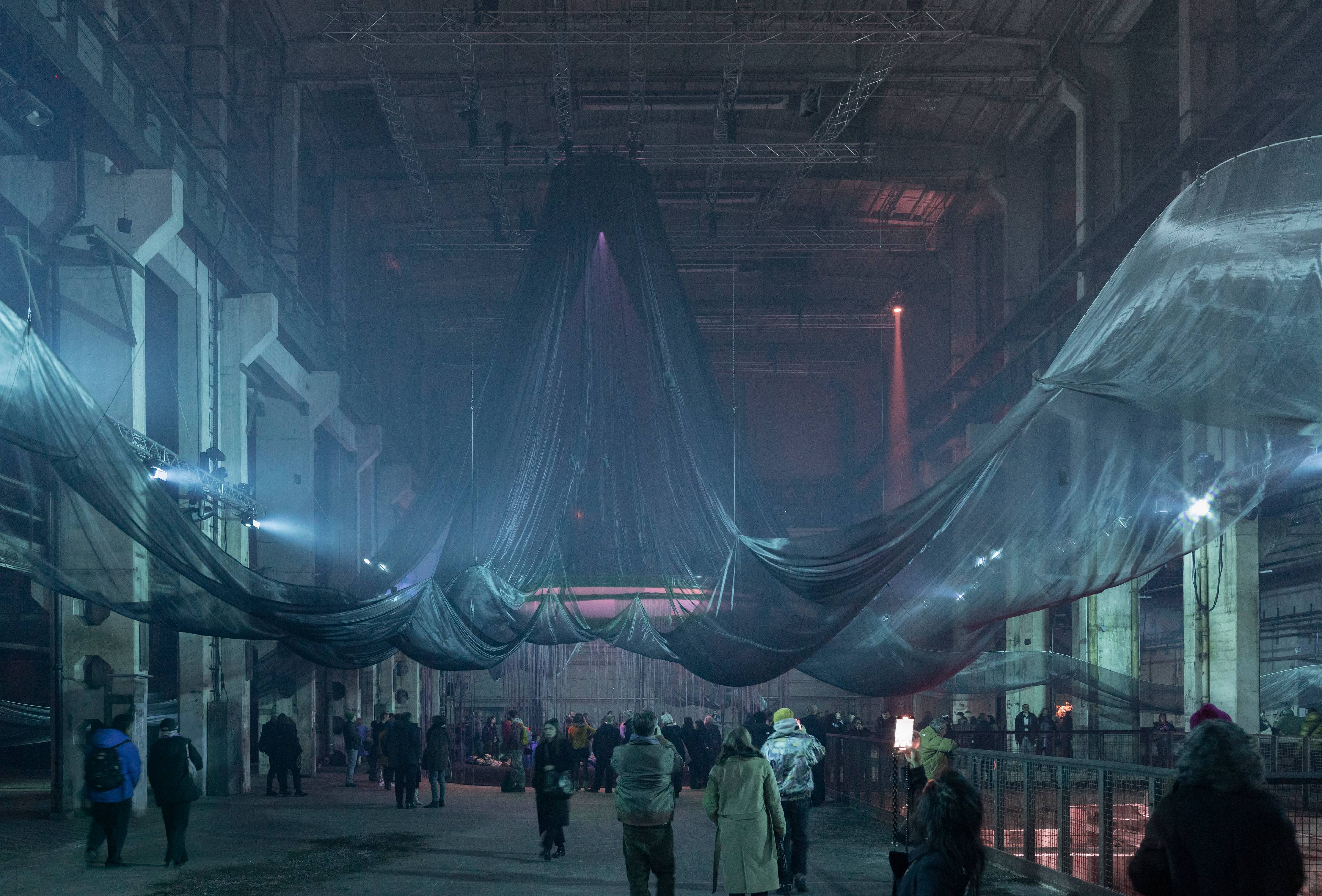
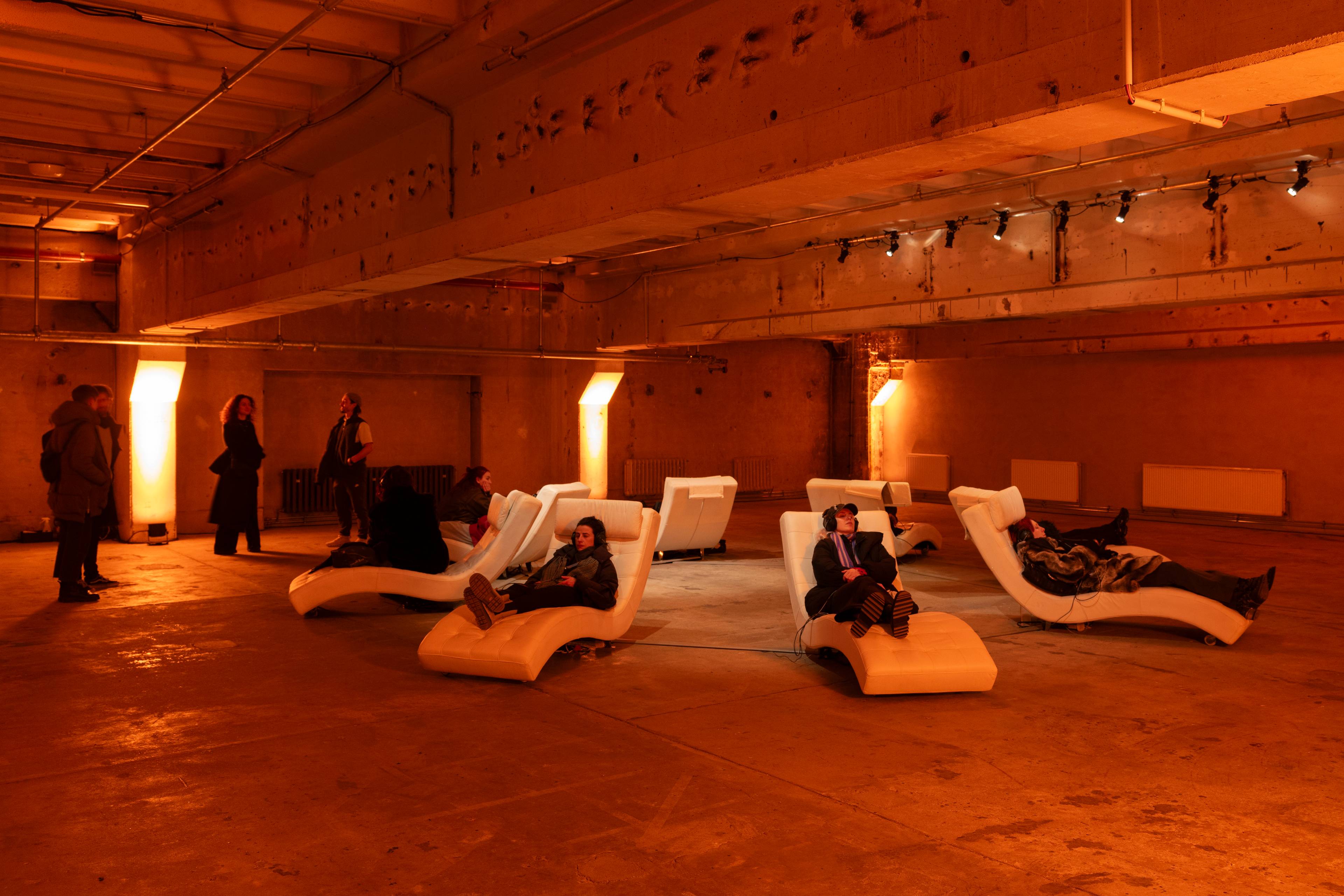
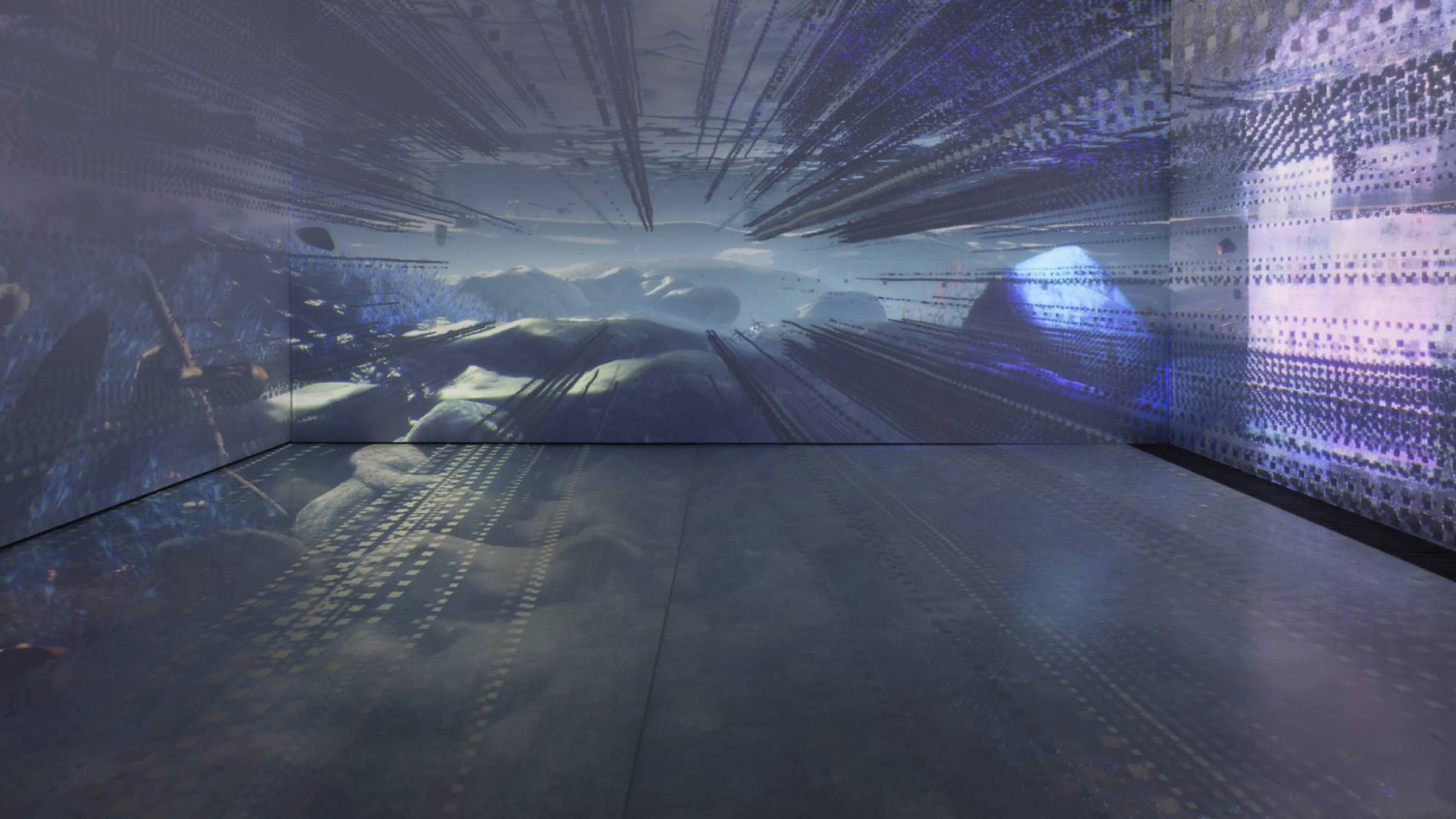
LAS’s Sensing Quantum programme brings together artists, scientists, thinkers and the public to explore the possibilities and implications of these technologies. Through newly commissioned installations, talks, performances and an ongoing learning programme, the initiative creates opportunities for audiences to encounter quantum systems beyond the laboratory, fostering reflection on their potential impact on society, perception and the ways we think about technology at large.
The Sensing Quantum Programme was awarded the 2025 S+T+ARTS Grand Prize – Innovative Collaboration by the European Commission, recognising its approach to fostering dialogue between artistic research, scientific innovation and public discourse.
Sensing Quantum: A Framework
The programme’s title resonates with three interrelated meanings.
Quantum sensing
One of the earliest practical applications of quantum technologies, quantum sensing is already used today to measure phenomena such as time, gravity and magnetic fields with unprecedented precision.
A moment of emergence
We are living in a time of rapid technological change, with quantum systems beginning to move from the lab into wider use. Collectively sensing, or observing, this shift can encourage us to engage and consider how we might contribute to shaping the path these technologies take.
Artistic practice
The title highlights artists’ ability to shape encounters with complex technologies, enabling audiences to sense and experience abstract systems while prompting reflection on their societal or even emotional dimensions.

On Collaboration, Learning
and the Role of Research and Development
Collaboration
Working at the intersection of art, science and emerging technologies, collaboration is central to every LAS programme. To develop interdisciplinary projects across emerging research areas, we bring together leading thinkers and practitioners whose insights into ongoing developments enrich and guide our initiatives.
Across the two large-scale commissions and the Sensing Quantum symposium, we collaborated with researchers and experts who are actively shaping the field of quantum today. We are grateful for the meaningful conversations and contributions from institutions such as Google Quantum AI, Forschungszentrum Jülich, ETH Zürich, Pasqal and the universities of Oxford, Edinburgh, Berlin, Paris and Naples.
Learning
Learning together is key to engaging with emerging technologies in meaningful and accessible ways. Throughout the Sensing Quantum programme, we provide a range of learning formats for different audiences, from impulse conversations with researchers introducing quantum ideas, to workshops for families and sensory, low-barrier activities. Across both artistic commissions, we collaborated with Tactical Tech to develop interdisciplinary learning materials for high school students, providing introductions to emerging quantum technologies and creating space for young people to reflect critically on their technological futures.
A selection of these materials can be found in the Resource section below.
Research and Development (R&D)
As an institution supporting artistic practices in the technological age, research and development (R&D), understood as the exploration, testing and prototyping of ideas, plays a fundamental role in our work. We believe that artists can be drivers of change and agents of innovation, with R&D projects serving as vital incubators.
In the context of emerging quantum technologies, R&D demonstrates that quantum systems provide fundamentally new aesthetic and conceptual tools, demanding novel methods, languages and approaches in artistic practice. Their technical complexity and limited accessibility make hands-on engagement, translation and collaboration essential for artists to move beyond metaphor. As the field develops, artistic inquiry can help interpret complex concepts, foster critical discourse and broaden the ways these technologies are imagined and experienced.
Resources
This section invites you to explore some of the materials gathered during the Sensing Quantum programme. It is an evolving resource that will continue to grow and be updated over time.
Read
Why Technology Needs Artists: 40 International Perspectives (2025) is a British Council publication featuring 40 statements from 56 global leaders in art, technology and culture. It argues that artists play a vital role in shaping the development, social relevance and cultural grounding of emerging technologies. You can read our contribution from page 32 [here].
Watch
In this section, you can explore videos from different parts of our programme – from in-depth conversations with collaborators shown in our Learning Spaces, to impulses captured during Laure Prouvost’s WE FELT A STAR DYING, and recordings from the conversation series The Radical Outside: Conversations on Liminals, part of Pierre Huyghe’s commission at Halle am Berghain.

The Impulses were a series of quantum conversations with researchers and practitioners, inviting audiences to explore Laure Prouvost: WE FELT A STAR DYING through the lens of specific areas of inquiry, such as quantum physics and Eastern philosophies, policy-making around emerging quantum technologies and the creative applications of quantum computing.

Tommaso Calarco, a leading quantum physicist and initiator of the Quantum Manifesto, reflects on recent developments in quantum research. The discussion connects the fundamental principles of quantum mechanics with political developments at the European level.

Günseli Yalçınkaya, an independent writer, researcher and internet folklorist based in London, explores the philosophical foundations of quantum theory and the myths around quantum technologies.